
The executives who find the steadiest path forward after a career disruption are rarely the ones who moved fastest. They are the ones who paused long enough to understand what actually happened, sat with it honestly, and came back with something more durable than what they had before.
That theme came through clearly in a conversation with Tim Schafer, co-founder of SearchTires.com, a tire price comparison platform built to connect consumers with transparent pricing and local retail choices. Tim’s story of launching early, stepping back, and returning with a stronger version of the same idea carried a lesson that goes well beyond the tire industry.
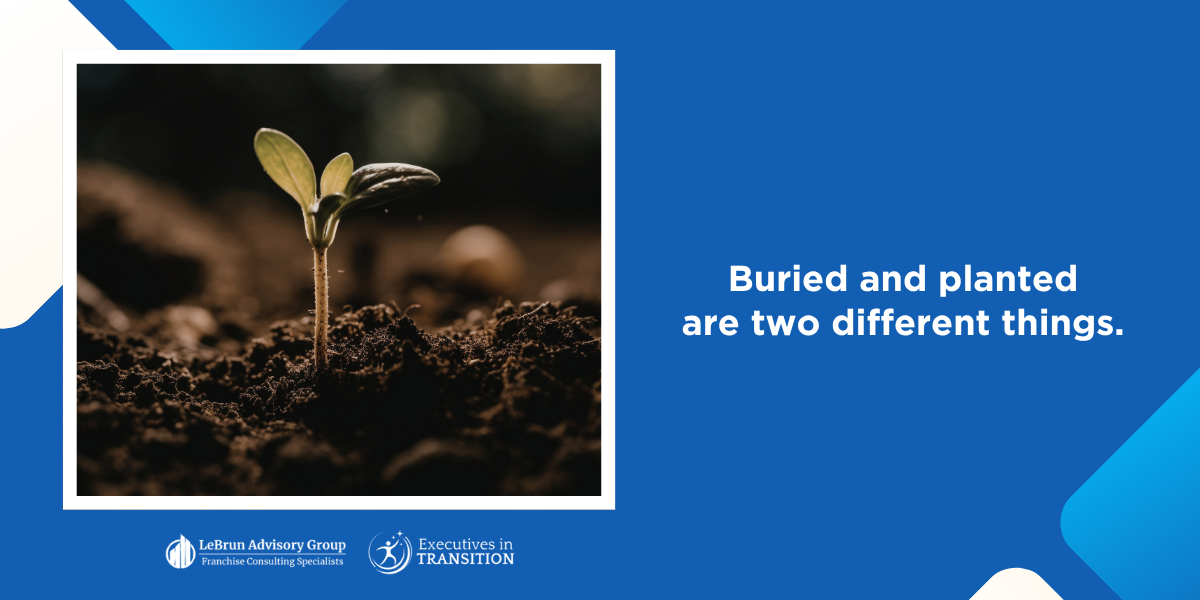
The Difference Between Buried and Planted
Tim shared something a mentor told him during a difficult season. Sometimes, when you think you have been buried, you have actually been planted.
That sentence has stayed with me.
The executives I work with who are coming out of an unexpected role elimination often carry a version of the same feeling. A career that took decades to build got restructured away. The title is gone. The routine is gone. The question sitting underneath everything is a quiet one: does any of it still count?
The answer is yes. Every time. The role ended. The experience, the judgment, the discipline, the relationships, all of that stayed. That is a foundation. That is something planted, waiting for the right conditions.
Timing Is a Variable, Not a Verdict
Tim’s first version of his company was launched before the market was ready. He recognized it, stepped back, and returned when the conditions aligned. He calls the early version a learning. The idea was sound. The timing was the variable.
That reframe matters a great deal when applied to a major life and business decision.

The executives I work with who make the wisest decisions are the ones who carry that reframe with them. They stop treating disruption as a verdict and start treating it as a variable they can influence.
Customer First, Always
One thread ran through Tim’s entire story without breaking. Every good decision he made was grounded in the customer experience. What does the person on the other side of this transaction actually need? What makes their life easier?
When that focus was sharp, his business grew. When other pressures pulled him away from it, the path got harder.
That principle transfers directly to business ownership. The franchise systems that build lasting value are led by owners who genuinely care about the people they serve. Systems can be learned. Processes can be refined. The care for the customer is something the owner brings to the door every single day.
What This Means Before Your Next Chapter
The most valuable conversations I have with executives early in the process are the ones where we slow down and look clearly at what they actually want. What does the next chapter need to feel like? What do they want to build? What kind of impact do they want to have on the people they serve?
My work is to help executives make a wise, confident business ownership decision. The process starts with the person. Everything else comes after. Schedule a complimentary 20-minute introductory call.